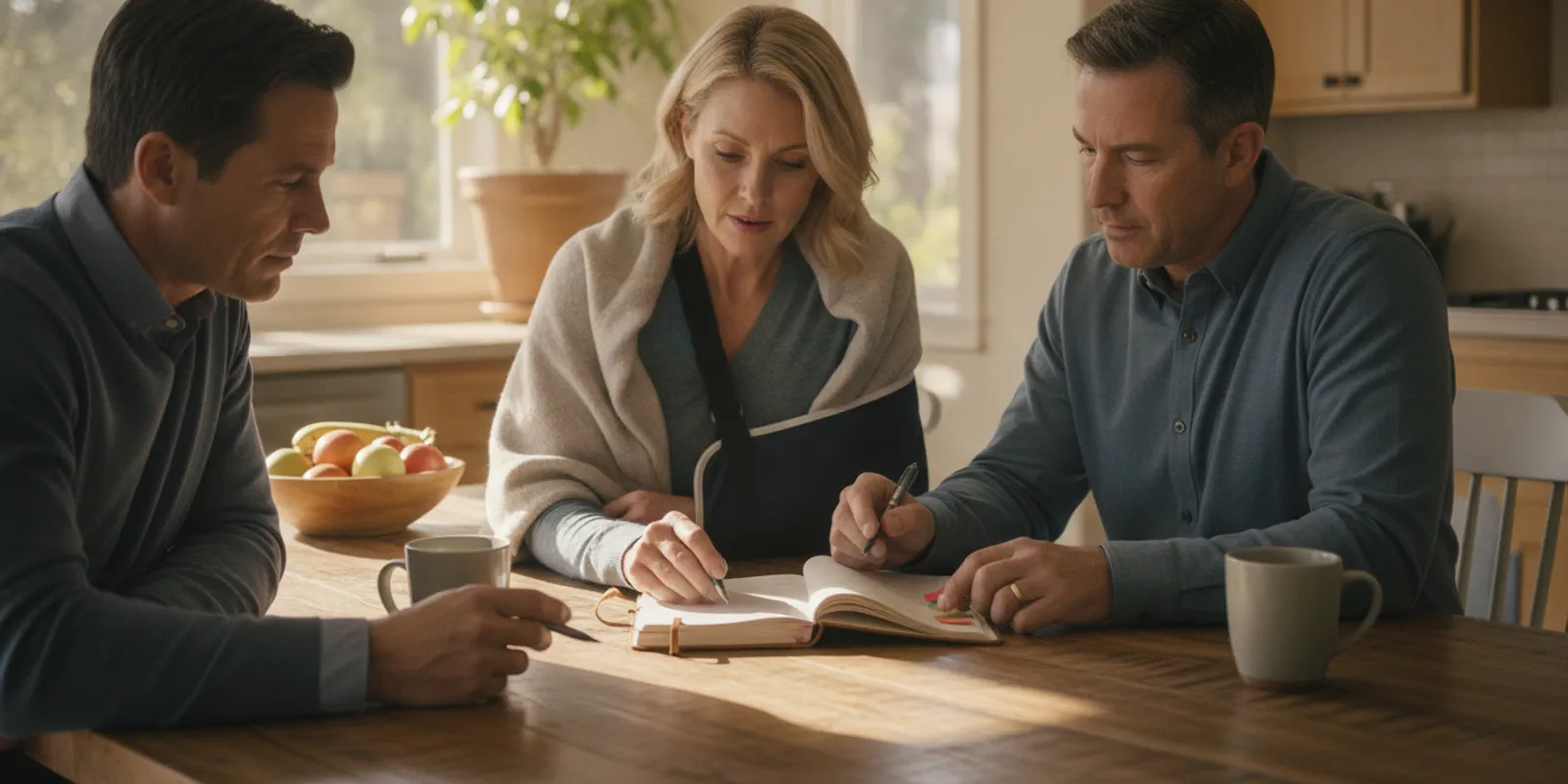
Families facing a serious injury often ask what is a catastrophic injury California law treats as a practical description, and what they should organize first. People use the phrase for an injury with lasting effects on health, independence, work, or daily life. It is not a diagnosis and not a checklist that decides a claim. At Law Office of Misoo Choi, APC, we can talk through your questions on a free first consultation. Call (323) 496-2574 or contact us today.
Call (323) 496-2574 or contact us today to discuss a California catastrophic injury question.
What is a catastrophic injury in California?
People use "catastrophic injury" for a severe injury that changes life in lasting or substantial ways. It may affect movement, memory, speech, self-care, work, relationships, or familiar activities. The phrase is not a medical diagnosis. A clinician evaluates health. A legal review looks at the facts, the evidence, and California law.
Examples include a traumatic brain injury, a spinal cord injury, major burns, an amputation, or several serious injuries together. Those are examples, not a complete list. The same diagnosis can affect two people differently. What matters is the person's condition before the event, the care they need now, and how daily life has changed.
A label alone does not explain those changes. One person may need help walking and dressing. Another with a similar diagnosis may move independently but struggle to remember appointments. A useful description names the task, the help needed, and whether the change has continued. It does not predict the future. Prognosis belongs with the treating team.
For a California family, the first useful question is often practical. What happened to the injured person, what care is needed, and what information can explain those changes over time? An online definition is not a medical finding, a legal conclusion, or a promise about a claim. Our personal injury services cover serious injuries, including brain and spinal injuries, for people across California.
Why California catastrophic injury claims are more complex
A catastrophic injury claim is often harder to evaluate than a short-term injury claim. The harm may continue for years. Families and insurers may need to look past current bills to future care, future work, and who can speak for the injured person. None of that decides fault or a result. It explains why a careful review takes more than a diagnosis.
Long-term medical care and life-care planning are one reason. A person may need rehabilitation, home support, equipment, or follow-up treatment for a long time. A life-care plan is a way professionals describe those future needs. It is not a bill the law automatically pays, and it is not something a family should invent from internet lists. Treating clinicians and, when appropriate, qualified planners explain what care is actually recommended.
Future lost earning capacity is another reason. If the injury changes the work a person can do, a claim may look at wages, benefits, and the ability to keep working. That is different from a receipt for a missed week. Whether earning capacity is part of a claim depends on the facts and the law. A family note about missed shifts is useful. It is not a calculation of damages.
Authority can also be more complicated. A spouse or adult child does not automatically speak for an injured adult. Who may share medical information, hire a lawyer, or make decisions depends on the person's capacity and on the legal documents that apply. Ask before sending private records. If the person can say what they want, follow that preference.
Deadlines add a separate layer, and they are not the same for every defendant. California Code of Civil Procedure section 335.1 gives two years for an action for injury to a person, or for a person's death, caused by another's wrongful act or neglect. That two-year period is the general rule for a private defendant. It does not govern every claim.
A public defendant can have a much shorter first step. Under Government Code section 911.2, a claim for death or for injury to a person must be presented to the public entity not later than six months after the claim accrues. That can include a city, a county, a school district, a transit agency, or another government body. This article does not walk through each agency's form. If a government vehicle or property may be involved, ask about that six-month claim early. Waiting for the ordinary two-year date can be too late.
Other facts can change timing too, including the injured person's age or capacity. Do not treat either number above as the deadline for your situation. We do not promise a filing date, a recovery, or a timeline. A consultation can sort out which clock may apply.
What families can organize
There is no document set every family must collect. Keep what you already have, write short factual notes, and ask professionals what else would help. Do not delay care to build a file. A few reliable notes beat a system nobody can keep up.
One folder, paper or private digital, is enough to start. Limit access to people who need it. Do not post medical details or send records through a channel you have not verified. Keep originals as you received them. If a date is uncertain, mark it as approximate. Do not guess, rewrite a record, or fill a gap to make the story sound complete.
What to keep.A useful note.Leave this to a professional.
Timeline and contacts.
Date, place, provider, and what you saw.
Who was legally at fault.
Papers you already received.
Discharge notes, bills, and letters, filed by date.
Records you are not authorized to request.
Daily changes.
The task, the help needed, and who observed it.
A diagnosis or a prediction of recovery.
Money and work.
Receipt, amount, date, and missed-work dates.
Whether a cost is recoverable.
A timeline entry can be one sentence. "May 12, afternoon: discharged, with written follow-up instructions." If two relatives remember a detail differently, write that the memories differ. Do not pick the version that sounds most certain.
A short journal is for real changes, not minute-by-minute monitoring. A clearer note says that on June 4 you saw him pause twice walking from the car to the door. "Walking is worse" is too vague. If the injured person described a symptom, say they said it. Include better days too, so the notes stay balanced. Skip a day when nothing meaningful changed.
For expenses, save the receipt and note the date, the amount, what it was for, and who paid. For missed work, note the dates and why the schedule changed. Do not estimate a missing amount or treat the list as a claim for damages. Our separate evidence preservation checklist covers photos, witnesses, and early proof. This guide stays on family organization after a catastrophic injury.
How to handle notes, privacy, and family disagreements
Keep three kinds of notes separate. An observation is what you saw. A report is what someone else said. A question is what you still need to ask. "Observation: needed help getting into the car. Reported: he said the light bothered him. Question for the clinic: should we report that?" That habit stops a relative's guess from being written as a medical fact.
Privacy is part of the same habit. Agree on one small circle for updates. Ask the injured person what they are comfortable sharing, and ask the clinic who is allowed to receive information. A shared folder should have named access, not a link that anyone can open. Do not send more than the recipient needs.
Families often disagree about what happened or how much help to give. Write the disagreement down instead of forcing one version. A specific offer is easier to accept or decline than a promise to handle everything. If the person says no, respect that unless there is an immediate safety issue that needs professional help. One person can keep the folder. Another can handle rides. Review the split when it stops working.
Medical questions belong with the treating team. Ask which changes to report, how to report them, what follow-up is planned, and who may join the conversation. Bring a few priorities to an appointment, not every question the family has ever had. If something feels urgent, call the provider or emergency services. Do not finish the notes first.
What to ask at a consultation
After immediate care is underway, a family may want a legal conversation. Useful questions are practical. What facts would you need to evaluate this? Which papers, if any, should we send, and how? Who may speak for the injured person? What happens next if you need more information?
Bring a short overview, not an argument. Include when and where the event happened, the sequence as you remember it, the care so far, and the main practical problems. Separate what you saw from what someone else told you. If you do not know, say so. A request for a record is not a finding that a firm will take the case or that a claim has a certain value.
Ask about fees before you decide. We work on a contingency fee basis, and we advertise that legal fees are not charged until we win. That is not a promise of a result. It also does not spell out every expense, or what happens if a case is unsuccessful. Those terms belong in a written fee agreement, which you should read before you sign.
We represent people in catastrophic injury and traumatic brain injury matters, along with other personal injury cases we handle. The first consultation is free. Call (323) 496-2574 or use our contact form. We can explain what a first conversation can and cannot answer from the information you have.
What families should avoid
- Do not treat an online description as a diagnosis or as proof that a claim qualifies.
- Do not delay medical care, or an urgent call, to gather papers.
- Do not guess at dates, alter records, or state an uncertain memory as fact.
- Do not share private medical details widely, or through a channel you have not verified.
- Do not assume a recovery, a dollar amount, or a timeline.
- Do not request records you are not authorized to receive, or speak for the injured person without authority.
If your family is sorting out a catastrophic injury in California, call Law Office of Misoo Choi, APC at (323) 496-2574. Contact us today for a free first consultation.
Frequently asked questions
What is a catastrophic injury California families mean?
It is a common way to describe a severe injury with lasting effects on health, independence, work, or daily life. California law does not use that phrase as a single test that automatically creates a claim. A clinician assesses the injury. A legal review looks at the facts, the evidence, and the law that applies.
Does a severe injury automatically mean a claim has value?
No. A serious injury does not by itself prove who was responsible or what, if anything, can be recovered. Those questions depend on the circumstances, the evidence, and the losses in that case. No consultation can guarantee a result or a timeline.
How long do California families have to act?
For many injury claims against a private person or business, Code of Civil Procedure section 335.1 allows two years. A claim against a public entity is different. Government Code section 911.2 generally requires that injury or death claim to be presented within six months. Other rules can change the timing, so these are not universal deadlines.
What should we organize before calling a lawyer?
Start with a short timeline, the providers involved, papers you already received, and notes about daily changes and out-of-pocket costs. Mark anything uncertain. You do not need a perfect file before a first call, and you should not send private records until you know they are appropriate to share.
Can a family member handle the claim?
Sometimes, but a family relationship alone does not give someone legal authority. Who may share medical information or hire counsel depends on the injured person's situation and on any legal authority already in place. Ask the firm what it needs in order to know who can give instructions.